
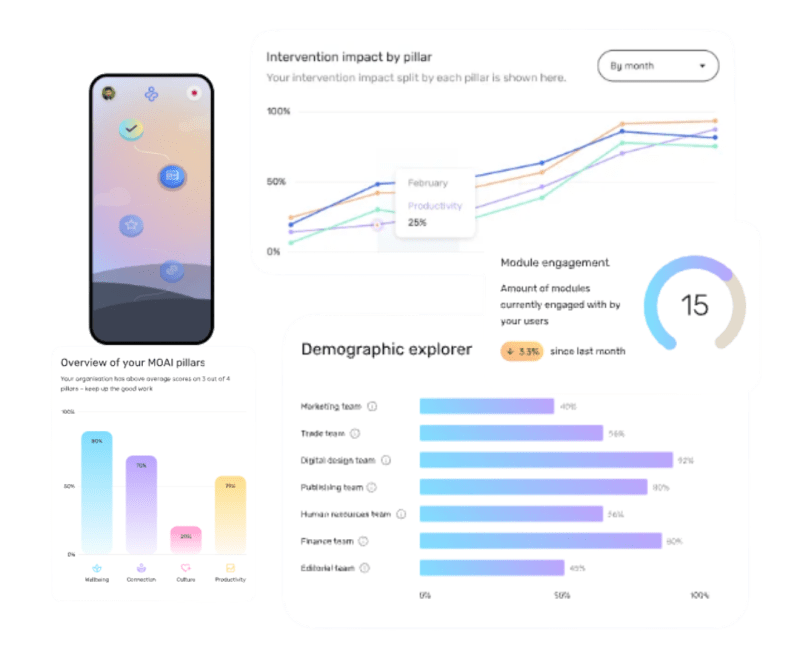
Measuring wellbeing tells you people are struggling. Pulse Check tells you why.
MOAI Pulse Check goes beyond traditional wellbeing measures to help you understand how your people are doing and, if they are struggling, why that may be.
It does this by identifying and measuring psychosocial risk factors across your organisation. Only when you understand which aspects of working life might be driving poor mental health are you able to make meaningful changes.
Assessing and managing psychosocial risks is also a legal requirement under health and safety legislation. By assessing wellbeing and psychosocial risks together, you’re able to demonstrate compliance and commitment to creating a safe, supportive workplace.

Understand the wellbeing challenges your people may be facing
Develop a mental health and wellbeing strategy that’s driven by data and insight

Identify the most common workplace psychosocial risk factors within your organisation

Assess the effectiveness of your current wellbeing activity
What MOAI Pulse Check Measures
MOAI Pulse Check considers the health of your whole organisation, assessing risk factors at the individual, group and organisational level.

Workplace Risk Factors
Workplace Risk Factors
Workplace risk factors are the day-to-day parts of working life which can cause stress, strain and mental ill health. These include:
High workload
Tight deadlines
Lack of clarity and demands
No autonomy
Poor communication
Job insecurity
Bullying and harassment

Individual Risk Factors
Individual Risk Factors
Individual risk factors are factors outside of the workplace which can have a negative impact on mental health. We don’t focus on risk factors we cannot change, such as genetics or demographics, instead we focus on areas where there is opportunity for change. These include:
Sleep
Exercise
Loneliness
Self-compassion

Wellbeing Measures
Wellbeing Measures
Wellbeing measures assess how an individual is doing right now. Not all psychosocial risks are visible, so these measures will help to identify individuals and teams in need of urgent support. Measuresl include:
Role satisfaction
Anxiety
Mood
Loneliness
Autonomy
Communication
MOAI Pulse Check is grounded in international health and safety guidelines